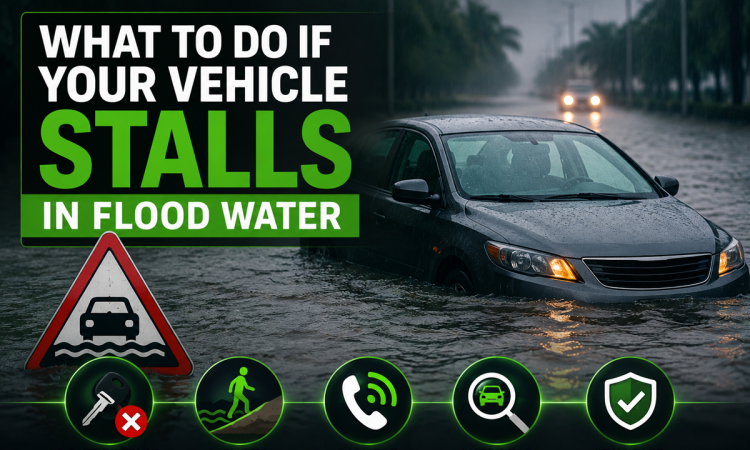
Heavy rain can quickly turn familiar roads into difficult driving conditions. In many cities, flooded roads become almost unavoidable during the rainy season, and drivers often find themselves trying to navigate through rising water just to get home or continue their journey.
Sometimes, everything seems fine until the vehicle suddenly loses power and comes to a stop in the middle of the flood. Moments like this can be stressful, confusing, and even dangerous — especially when you’re unsure of what to do next.
The truth is, the decisions you make immediately after your vehicle stalls in flood water can determine whether the damage remains minor or turns into a major repair problem. Understanding the right steps to take can help protect both your safety and your vehicle.
🚨 First Rule: Don’t Try to Restart the Engine
This is the mistake many drivers make immediately. Once your vehicle stalls in flood water, avoid turning the ignition repeatedly. Why? Because water may have entered the engine. Restarting it can cause serious engine damage known as “hydrolock,” where water prevents the engine from functioning properly. And unfortunately, that damage is expensive.
Instead, stay calm and switch on your hazard lights if possible.
🚗 Move to Safety First
If the water level is rising quickly, your safety matters more than the vehicle.
- Carefully exit the car if it is safe to do so
- Move to higher ground
- Avoid walking through strong flood currents
- If children or passengers are inside, help them out first
Never underestimate flood water. Even shallow-looking water can be dangerous.
📞 Call for Help
Once you’re safe, contact:
- A towing service
- Your mechanic
- Roadside assistance if available
Trying to force the vehicle out yourself may worsen the problem.
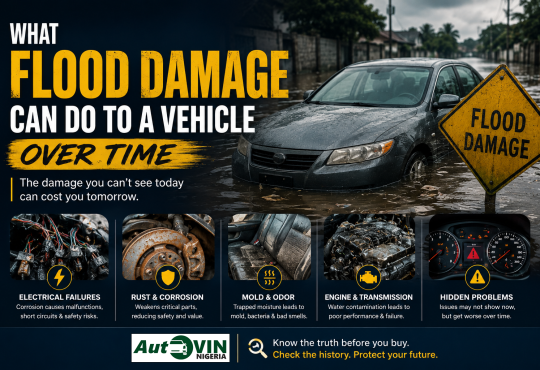
🔍 Don’t Ignore Possible Water Damage
Even if your vehicle eventually starts again, flood water can still affect:
- The engine
- Electrical systems
- Brakes
- Transmission
- Sensors and wiring
Some damage may not appear immediately. Days or weeks later, strange warning lights and expensive faults may begin showing up.
This is why a proper inspection is important after any flood exposure.
⚠️ Why This Matters for Used-Car Buyers Too
Here’s something many people don’t think about:
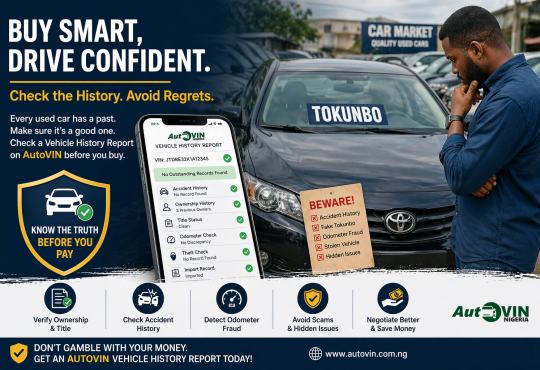
- Some flood-damaged vehicles are cleaned up, repaired, and quietly resold in the market.
- The body may look perfect, but hidden water damage can remain inside the vehicle for years.
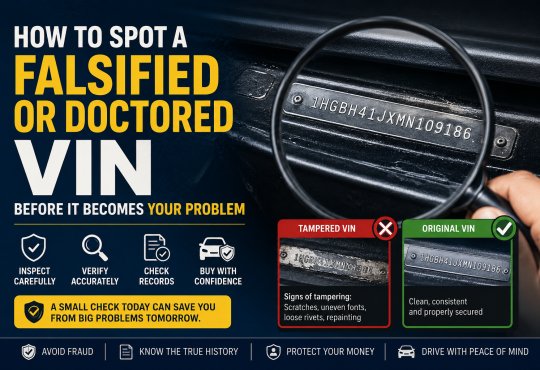
- This is why checking a vehicle’s history before buying is very important — especially during rainy season.
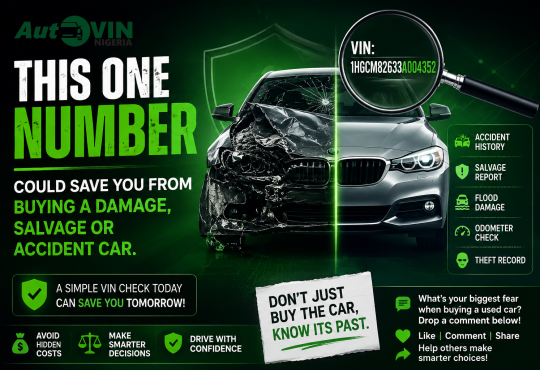
A VIN check can help reveal:
- Flood damage history
- Insurance record
- Salvage reports
- Accident history
- Title records
Because sometimes, the biggest problems are the ones you cannot see immediately.
🌧️ Prevention Is Better Than Repairs
Before driving during heavy rain:
- Avoid flooded roads whenever possible
- Check weather conditions
- Ensure your tires and brakes are in good condition
- Don’t follow other cars blindly into deep water
Remember: just because another vehicle passed safely doesn’t mean yours will.
Let’s Hear From You!
- Have you ever driven through flood water before?
- What’s the scariest rainy-season driving experience you’ve had?
Drop your experience in the comments below — your story might help another driver stay safe this rainy season.
👉 Stay informed. Stay safe. Verify smarter with AutoVIN.