Imagine this: you’ve just bought a sleek Tokunbo car. The engine sound like new, the body is clean and spotless, and you’re already imaging yourself cruising down Third Mainland Bridge or Lekki-Epe Expressway. Everything feels perfect until you request an insurance quote, and the price nearly knocks you off your chair.
You double-check the figures; same name, same car, but somehow, the premium is way higher than you expected. What’s going on?
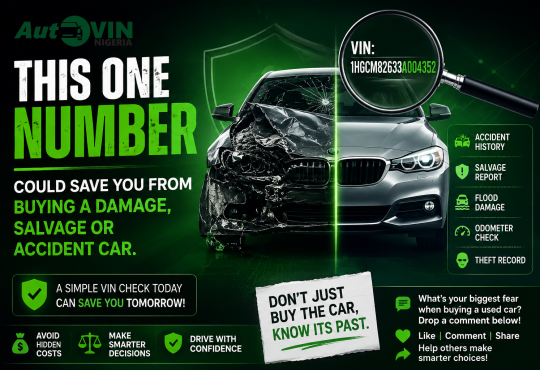
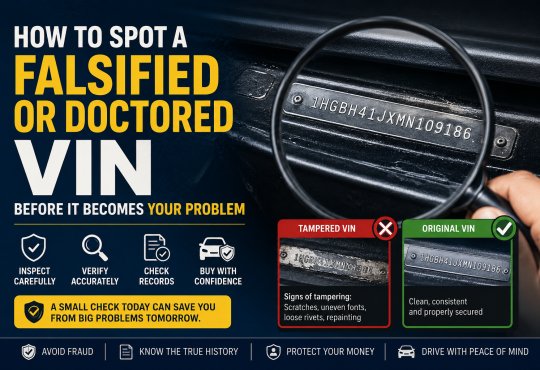
The answer is hidden in your car’s VIN data — those 17 tiny characters stamped on your dashboard that carry a lifetime of secrets.
The VIN: Your Car’s DNA
Every vehicle has a Vehicle Identification Number (VIN) — like a National ID, but for your car. It doesn’t just say what brand or model it is; it also reveals the car’s entire life story, from factory to freeway.
Insurance companies rely heavily on VIN data to assess risk. Through that one number, they can see whether your car has been in accidents, had flood or fire damage, been declared a total loss abroad, or even had multiple insurance claims before landing in Nigeria.
And here’s the thing a car with a rough past is seen as a higher risk. More risk means higher premiums.
Why a Car’s History Affects Its Insurance
Let’s break it down with a simple example:
Two friends, Chika and Tunde, both buy the same model of Toyota Camry.
Chika’s car has a clean VIN report — no accidents, no major repairs.
Tunde’s car, on the other hand, was once involved in a collision overseas and had an insurance claim for front-end damage.
When both apply for car insurance, guess whose premium will be higher? Yep — Tunde’s.
That’s because insurers use VIN history to predict future risk. If the car has already been damaged or repaired, it’s statistically more likely to generate another claim down the line.
How You Can Protect Yourself
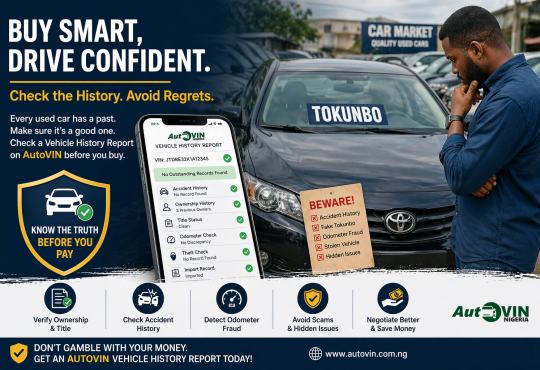
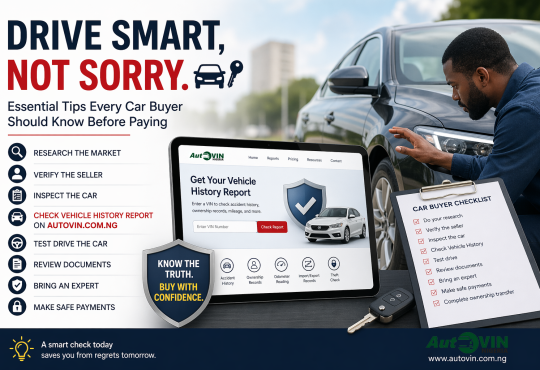
Before you buy that “clean” Tokunbo or fairly used car, don’t just take the seller’s word for it. Check the VIN history first.
With a quick search on AutoVIN Nigeria, you can uncover details like:
- Accident records
- Odometer rollbacks
- Title status (clean, salvage, rebuilt)
- Previous insurance claims
- Theft records
Knowing the full history of your car or vehicle helps you negotiate better, avoid hidden problems, and even get fairer insurance rates. Think of it as doing your homework before spending millions of naira.
Conclusions
In today’s world, knowledge is power and when it comes to your car, VIN data gives you that power. Insurers use it to set premiums, and you can use it to make smarter buying decisions.
So next time you’re buying a car or renewing your insurance, don’t ignore those 17 characters . Your car’s history might just save (or cost) you a lot of money.